Writing
Independent synthesis, research-facing notes, and writing on learning, evidence, AI, and human agency.
Learning Without Gatekeepers
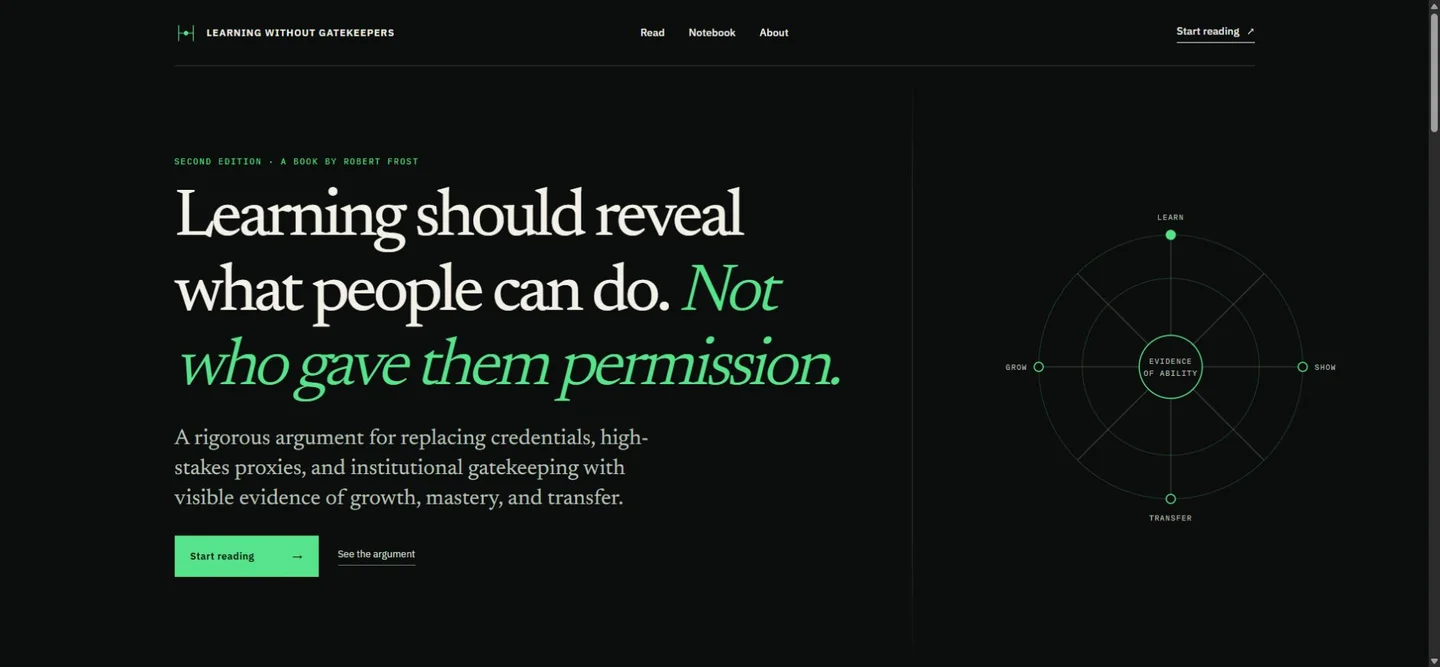
PublishedAn independent book and interdisciplinary research synthesis, second edition, 2026. It examines how people learn, why active practice matters, and how education can distinguish growth, mastery, and transfer from institutional proxies. It is not original experimental neuroscience or a peer-reviewed scientific monograph.
- Edition context
- About the second edition
Five parts of the argument.
The Gatekeeper Problem
Frames the gap between institutional permission and demonstrable capability.
Read canonical chapterLearning Is Biological
Separates biological learning from metaphors and product claims.
Read canonical chapterMeasuring Growth, Mastery, and Transfer
Distinguishes immediate performance from delayed, independent use.
Read canonical chapterData With Dignity
Connects evidence systems to consent, context, agency, and accountability.
Read canonical chapterAdaptive Content, AI, and the Learner
Asks how adaptive systems can support rather than replace the learner’s work.
Read canonical chapter
Questions across the work.
Learning is change in the learner.
Exposure to information is a starting point. Learning shows up in what someone can remember, explain, apply, and produce, and in how performance changes through practice.
Measurement should help people grow.
Feedback is most useful while learning is happening. It should guide the next attempt, not simply sort people after the fact.
Credentials and ability are different things.
Institutional labels can conceal both capability and its absence. People need better ways to demonstrate what they know and can do.
AI should support the work of learning.
An AI system should help the learner practice, receive feedback, and try again. The quality of a generated answer and the learner's ability to use knowledge are different things; useful learning systems need to keep both in view.
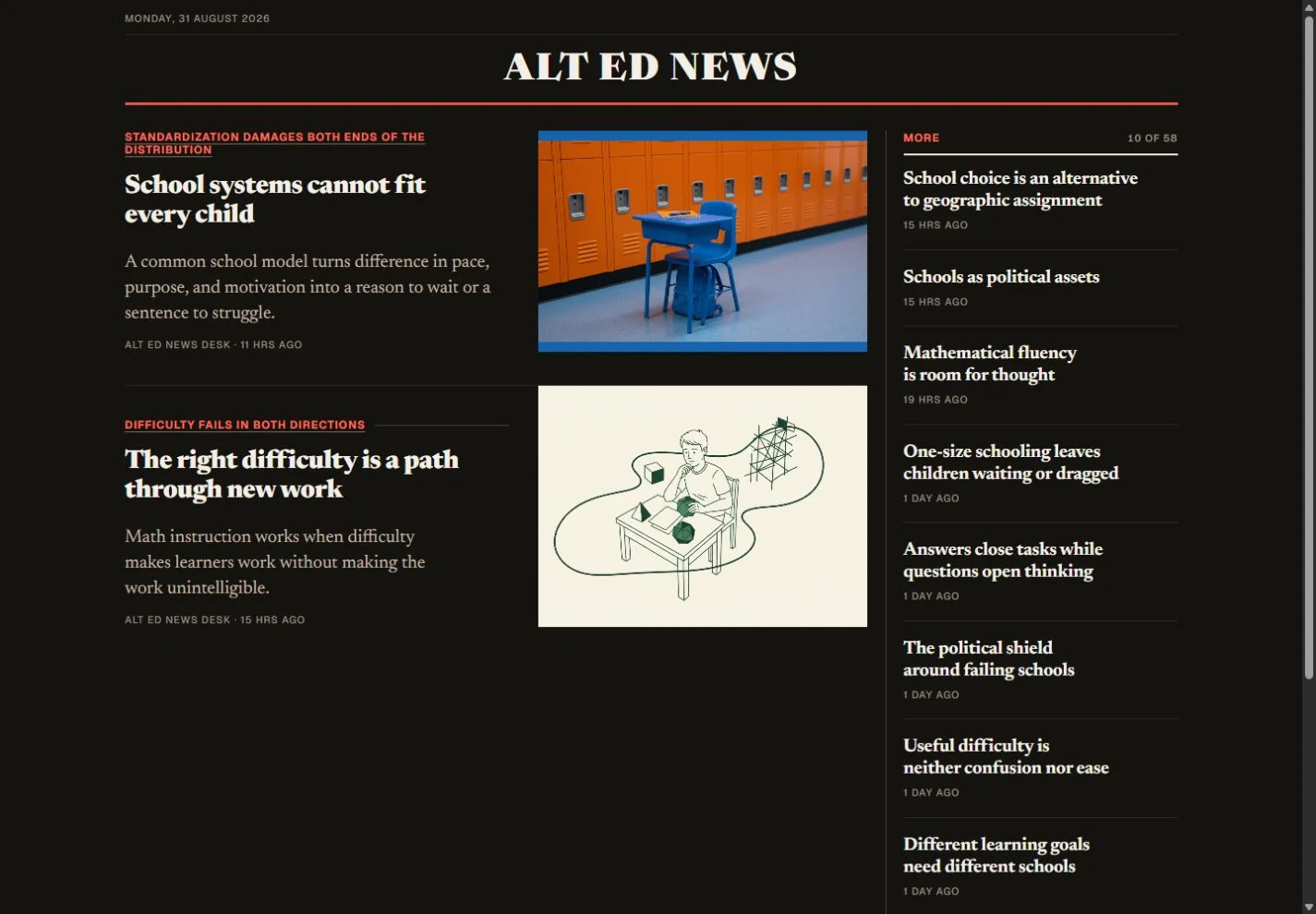
Alt Ed News
Education, AI, and human agency.
A publication examining education and artificial intelligence through the lens of human agency: what people can question, learn, and do for themselves. It connects current debates to the ideas behind my work in learning and institutional reform.